What causes airplane turbulence? Five common sources explained
Turbulence is movement in the surrounding air. Here is how jet streams, storms, terrain, wind changes, and warm daytime air can make a flight feel bumpy.
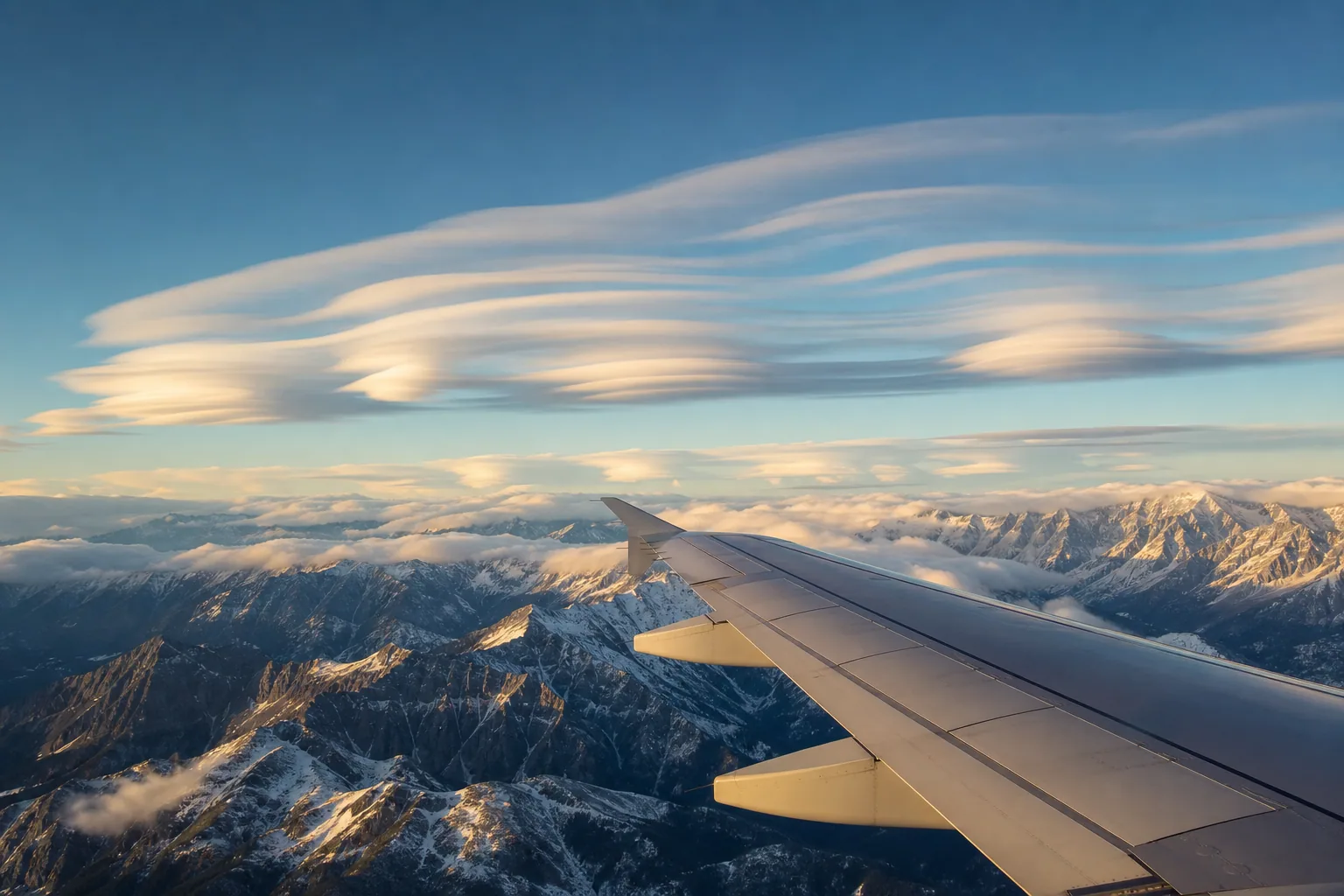
Airplane turbulence can feel alarming, but it is a normal part of aviation. The aircraft is moving through air that has changing speed or direction, similar to a car traveling over an uneven road, although the causes are atmospheric rather than physical bumps.
1. Clear air turbulence near the jet stream
Clear air turbulence often occurs at cruising altitude without a nearby thunderstorm. It can form where fast moving jet stream air sits beside slower air, creating strong wind shear. Because there may be no visible cloud, crews rely on forecasts, aircraft reports, and onboard information.
2. Thunderstorms and convective weather
Thunderstorms contain powerful rising and sinking air. Aircraft do not intentionally fly through severe storm cells; pilots and air traffic control use weather radar and advisories to route around them. Turbulence can still occur outside the cloud, which is why convective weather deserves a separate storm timeline.
3. Mountain waves
Strong wind crossing a mountain range can create waves on the downwind side, sometimes far above the peaks. These mountain waves may be smooth in one layer and turbulent in another. Changing altitude can sometimes improve the ride.
4. Weather fronts and changing wind
Cold fronts, warm fronts, and areas of rapidly changing wind can produce uneven air. The same weather system may affect airport conditions during takeoff or landing and create a separate region of bumps during cruise.
5. Thermal turbulence near the ground
Sun heated ground creates bubbles of rising warm air, especially on hot afternoons over land. This can cause light bumps during climb or descent. It often decreases after the aircraft climbs above the most active layer.
Can pilots avoid turbulence?
Often they can reduce exposure by changing altitude, adjusting speed, or accepting a different route. Conditions can change quickly, and completely smooth air cannot be guaranteed. A good turbulence forecast helps passengers prepare while leaving operational decisions to the flight crew.